


Toronto & Niagara Falls: A Voyantra Guide to Experiencing Both
Toronto and Niagara Falls are two places that seem made to be combined.
Not because they’re similar.
Quite the opposite.
Toronto gives you the energy of one of North America’s great cities — neighbourhoods, food, culture, waterfront and that unmistakable skyline rising beside Lake Ontario.
Then, around 80 miles away, Niagara Falls replaces the city streets with something altogether more powerful.
The sound of the water. The mist hanging above the gorge. And eventually that first moment when you stand in front of the Falls and realise photographs don’t really prepare you for the scale of what you’re looking at.
Together, they create two very different sides of Canada.
And if you’re considering a holiday that includes both, perhaps the first question isn’t simply “What is there to see?”
It’s “How do I make the most of the time I have there?”
Let’s take a closer look.
Toronto: don’t try to see everything
Toronto has a slight problem when it appears on the same itinerary as Niagara Falls.
Niagara has one of the world’s most recognisable natural wonders waiting for you.
Toronto doesn’t have to compete with that.
Give the city a little time and you’ll discover that its appeal isn’t really about one attraction. Toronto is better experienced in pieces — a neighbourhood here, a market there, a view across the lake, somewhere unexpected for lunch, and perhaps that famous view from high above the city.
If you’ve only got a couple of nights, trying to tick off everything Toronto has to offer is probably the quickest way to enjoy very little of it.
Instead, choose the parts that interest you.
Start with the skyline
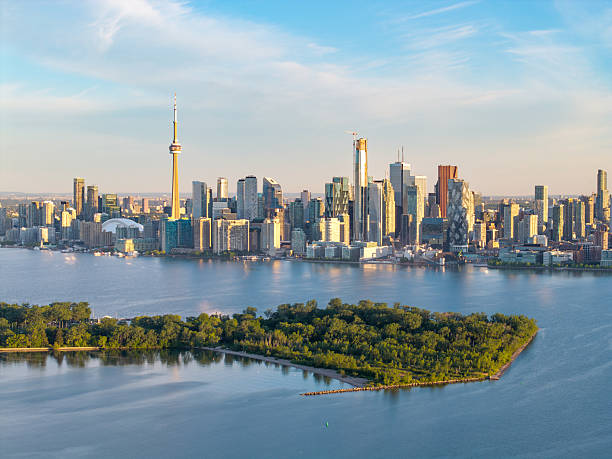
It’s difficult to talk about Toronto without mentioning the CN Tower.
At 553.3 metres high, it has dominated the city’s skyline since the 1970s, and heading up gives you something that’s quite difficult to appreciate from street level: just how enormous Toronto — and Lake Ontario beside it — really is.
On a clear day, the views stretch far beyond the city.
And if simply looking through the windows feels a little too sensible, there’s also EdgeWalk, where those with considerably more enthusiasm for heights than some of us can walk outside around the tower’s main pod while attached to an overhead safety system.
You certainly can’t accuse Toronto of not providing options.
But don’t spend your entire visit looking down at the city.
Come back to street level and Toronto becomes much more interesting.
A city you can discover through its neighbourhoods
One of Toronto’s strengths is how quickly its character can change.
Spend some time around St Lawrence Market and you’re exploring a part of the city where food, local produce and Toronto history come together beneath one roof.
Move across to the Distillery Historic District and the surroundings change again — Victorian industrial architecture now filled with independent shops, galleries, restaurants and cafés.
Then there’s Kensington Market, which feels different again.
Colourful, multicultural and deliberately less polished, it’s the sort of neighbourhood where wandering without much of a plan can be part of the attraction.
And that’s perhaps one of the best ways to approach Toronto.
You don’t necessarily need an itinerary for every hour.
Sometimes finding a neighbourhood you like, somewhere good to eat and simply seeing where the next street takes you is enough.
 For more ideas while planning your time in the city, the official Destination Toronto guide is a useful resource. Explore Toronto with Destination Toronto
Toronto is also a waterfront city
Look at photographs of Toronto and your attention naturally goes towards the skyline.
It’s easy to forget what’s sitting beside it.
Lake Ontario is enormous.
Toronto’s waterfront gives you a very different perspective on the city, particularly when you head across to the Toronto Islands.
A short ferry ride takes you away from the high-rises to a collection of small islands with walking and cycling routes, beaches, green spaces and some superb views back towards the skyline. Destination Toronto
If your idea of a city break normally involves traffic, pavements and buildings, spending part of the day beside the water can completely change the pace.
And when you return across the lake, Toronto is waiting again.
What about the food?
This is one part of Toronto where making too many plans could actually work against you.
Toronto is one of the world’s most multicultural cities, and that diversity is very obvious when you start looking at what there is to eat.
Chinese, Caribbean, Italian, Indian, Middle Eastern, Korean, Greek and countless other influences sit alongside Canadian favourites.
So rather than deciding that every meal needs to take place somewhere famous, leave a little room for spontaneity.
You may remember the restaurant you happened to discover far longer than the one somebody told you that you had to visit.
Are two nights in Toronto enough?
Enough to see Toronto?
No.
But that’s probably the wrong question.
Two nights can absolutely be enough to experience Toronto.
Choose a few things that genuinely interest you rather than treating the city like a checklist.
You might spend one day around the waterfront and central sights, head up the CN Tower later in the afternoon and find somewhere good for dinner.
The next could be about markets, neighbourhoods and simply exploring.
Or do something completely different.
The important thing is accepting that you’re getting a taste of the city rather than trying to conquer it.
Because if Toronto leaves you thinking I’d like to come back here, that isn’t a failed visit.
Quite the opposite.
And then you leave the skyline behind…
This is where combining Toronto and Niagara Falls becomes particularly interesting.
You’re not flying somewhere else to begin the next part of the holiday.
You simply leave the city behind and head towards the Niagara region.
And gradually, the character of the journey changes.
Because waiting at the other end is something that feels very different from Toronto.
Niagara Falls.
Niagara Falls: the first view is only the beginning
You’ve almost certainly seen Niagara Falls before.
Photographs. Television. Films. Travel programmes.
You know what it looks like.
At least, you think you do.
What those images struggle to reproduce is the physical presence of the place.
The noise.
The amount of water.
The spray rising into the air.
And the sheer scale when you’re finally standing close enough to experience it for yourself.
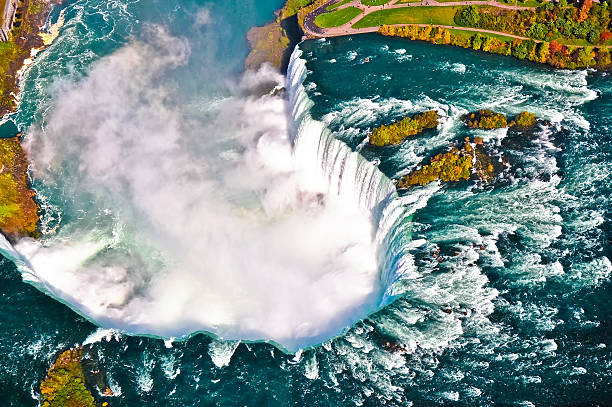
Niagara Falls actually consists of three waterfalls — Horseshoe Falls, American Falls and Bridal Veil Falls — straddling the border between Canada and the United States.
From the Canadian side, you’re particularly well placed for those famous panoramic views.
But standing and looking at Niagara is only one way of experiencing it.
Get closer to the Falls
If you’re visiting when the seasonal boat services are operating, heading onto the water gives you an entirely different perspective.
Niagara City Cruises takes passengers into the Niagara Gorge and towards the Falls.
The poncho suddenly makes a great deal of sense.
From above, Niagara looks spectacular.
From down on the river, surrounded by the noise and spray, it feels considerably more powerful. Niagara Parks currently lists the Voyage to the Falls cruise as a seasonal experience. Explore Niagara City Cruises with Niagara Parks
For another perspective, Journey Behind the Falls takes you down through tunnels in the bedrock to observation areas beside Horseshoe Falls.
Rather than simply seeing Niagara from a distance, you’re experiencing the force of it from remarkably close range.
And that’s one of the advantages of giving Niagara more than a hurried few hours.
You have time to experience it in different ways.
Discover Journey Behind the Falls at Niagara Parks
See Niagara from above
After getting close enough to feel the spray, seeing the Falls from above provides yet another perspective.
The Skylon Tower has observation decks overlooking the Falls and the surrounding area, while helicopter sightseeing flights are another option for those wanting something particularly memorable.
Neither is essential to say you’ve “done Niagara”.
That’s not really the point.
They’re simply different ways of understanding the scale of where you are.
And that’s something Niagara is very good at — changing depending on where you’re standing.
Why stay at Niagara Falls rather than just visit for the day?
Toronto to Niagara is perfectly possible as a day trip.
Thousands of people do exactly that.
But staying changes the experience.
Once the day visitors begin leaving, you don’t have to.
There’s time to walk beside the Falls without constantly thinking about the journey back to Toronto.
You can see how the atmosphere changes towards evening.
Depending on the schedule during your visit, you may see the Falls illuminated after dark or experience one of Niagara Parks’ seasonal evening events. Niagara Parks advises checking current schedules when planning around evening experiences. Niagara Parks
Then you wake up the following morning and you’re still there.
That gives you something valuable on any holiday:
time.
Time to see the Falls properly.
Time to explore beyond them.
And time for the Niagara region itself.
Because Niagara isn’t only about the Falls
It sounds almost ridiculous to say that.
You travel to Niagara Falls to see Niagara Falls.
Of course you do.
But venture away from the immediate attraction and there’s another side to the region.
The Niagara Parkway follows the Niagara River through attractive scenery and connects several places worth exploring.
And then there’s Niagara-on-the-Lake.
Historic buildings, tree-lined streets, independent shops and restaurants give the town a completely different character from the area immediately surrounding the Falls.
The Niagara Peninsula is also one of Canada’s best-known wine regions.
Vineyards and wineries spread across the surrounding countryside, with the area particularly famous for icewine — produced using grapes that freeze naturally on the vine.
Suddenly a Toronto and Niagara Falls trip can contain rather more than you might initially expect.
A major city.
Markets and neighbourhoods.
Lake Ontario.
One of the world’s great natural spectacles.
A historic town.
Wine country.
All within one relatively compact part of Canada.

Two nights at Niagara Falls — is that too long?
For many travellers, we’d argue the opposite.
Two nights gives Niagara room to become somewhere you experience rather than somewhere you photograph.
You could arrive from Toronto, settle in and take that first walk towards the Falls without feeling that you immediately need to start ticking things off.
Then you’ve got a full day for whichever experiences appeal most — perhaps getting onto the water, Journey Behind the Falls, exploring Niagara-on-the-Lake or simply spending more time around the Falls themselves.
And there’s still another evening.
It turns Niagara from an excursion into part of the holiday.
Why Toronto and Niagara Falls work so well together
Perhaps the best thing about combining these two destinations is that they don’t feel alike.
Toronto gives you energy.
Neighbourhoods. Restaurants. Architecture. Culture. Skyline. Waterfront.
Niagara gives you something much more elemental.
Water. Rock. Noise. Mist. Scale.
And then the surrounding region adds another layer entirely.
You can go from looking across Toronto from more than half a kilometre above the ground to standing beside millions of litres of water cascading over Niagara Falls.
From a multicultural food market to a vineyard.
From skyscrapers beside Lake Ontario to the historic streets of Niagara-on-the-Lake.
All without needing another flight between them.
The contrast isn’t a problem with the combination.
It’s exactly why it works.
Making Toronto and Niagara Falls part of a bigger journey
Of course, Toronto and Niagara Falls don’t have to be the entire holiday.
They can be.
But their location also makes them particularly interesting as part of something larger.
You might combine them with more of Canada, add another North American city, travel further through Ontario — or even arrive in Canada after spending several days somewhere completely different.
And that’s where multi-centre travel becomes interesting.
It isn’t simply about squeezing more destinations into one holiday.
Done properly, each place should add something the others don’t.
Toronto and Niagara Falls already demonstrate that rather well.
One gives you the city.
The other gives you the spectacle.
And together, they give you a Canadian journey that can feel considerably bigger than the distance between them.
Thinking about Toronto & Niagara Falls?
Whether they’re the focus of your holiday or two stops on a much bigger adventure, there’s no single “correct” way to experience them.
You might want every day filled with sightseeing.
You might prefer a couple of experiences and plenty of time to explore independently.
Or perhaps you’ve seen an itinerary containing Toronto and Niagara and simply want to understand what those few nights could actually give you.
That’s where Voyantra Holidays can help.
Not by deciding how you should experience Canada, but by helping you put together the journey that suits the way youwant to travel.
Daniel Smith
Founder, Voyantra Holidays
Luxury Holidays, Effortlessly Yours.